
cor123
Well-known member
Press Release:
CORVETTE RACING AT LONG BEACH: Robert Wickens Q&A
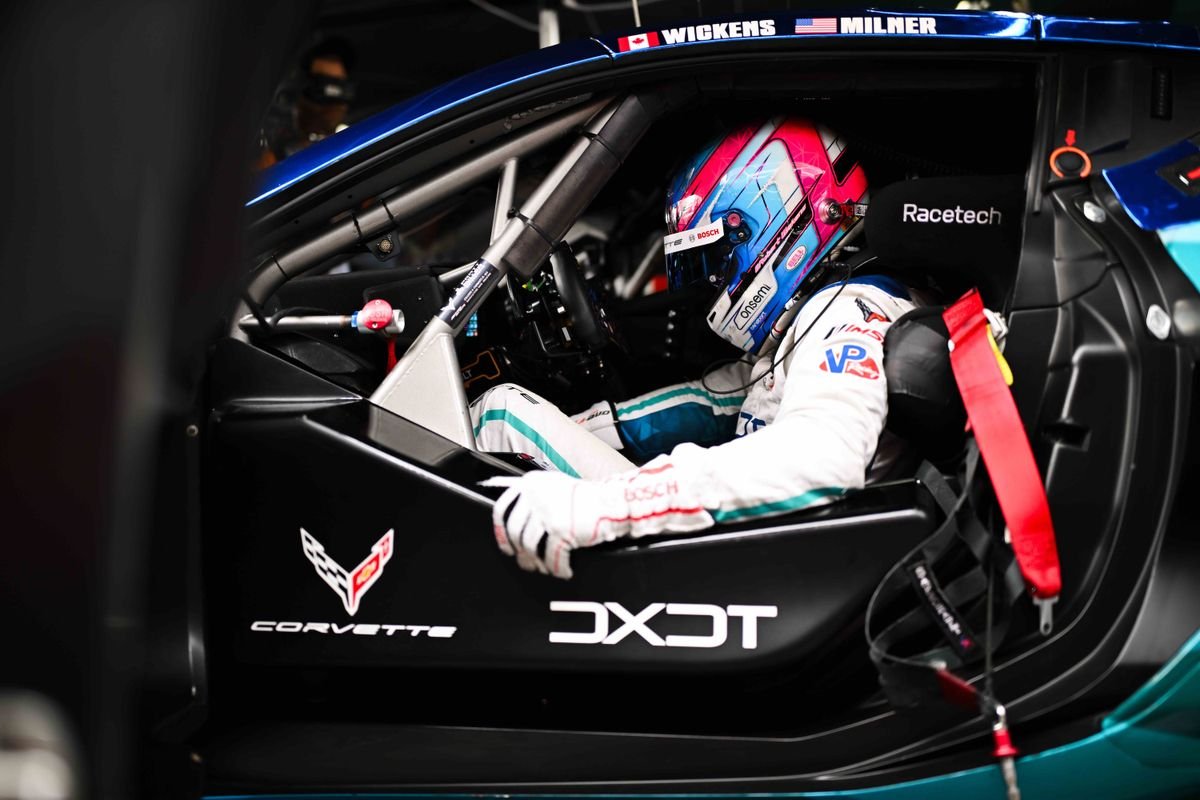
Corvette Z06 GT3.R driver Robert Wickens met with members of the media via Zoom on Tuesday afternoon to discuss his return to DXDT Racing’s Corvette at the Grand Prix of Long Beach on April 17-18. He will pair with Mason Filippi in the No. 36 Corvette that will be equipped with Bosch’s electric braking system for Wickens, who made his GTD debut a year ago at Long Beach in the ground-breaking Corvette entry.
ROBERT WICKENS, NO. 36 CHEVROLET CORVETTE Z06 GT3.R
I don’t want to spoil the surprise. Rob, why don’t you tell us what you are going to be doing this year?
“Yeah, So for 2026, we’re happy to announce that we’re continuing with DXDT Racing, Corvette and General Motors in the same calendar as we did in 2025. So I am going to be doing all five of the sprint rounds of the IMSA WeatherTech SportsCar Championship alongside a former teammate, a good friend of mine, Mason Filippi. So it’s going to be an exciting season. I am hoping to continue the momentum that we started to create in 2025, although it feels like a lifetime ago now since I last drove the car in VIR. But really just excited to continue with DXDT Racing and Corvette and most importantly, with Bosch with my electronic braking system and my hand controls that help make the whole thing possible.
“I’s not going to be easy. In a way, I almost felt more prepared last year, even though it was my first race in the Corvette. The last time I’ve driven the car was at VIR in early August. I am confident we have the right people to get up to speed quickly and hopefully we can have more success in Long Beach.”
Talk a little bit more about your relationship with Mason as teammates and friends previously.
“Yeah, watching Mason's career grow from 2022 onwards has been a fun journey. Obviously I entered the Michelin Pilot Challenge series in a different stage of my career than Mason. He’s a hard worker. He’s a great teammate to have and an asset to any team he’s a part of. So we’re really looking forward to working more hand-in-hand like at the Nürburgring 24 Hours (in 2025). We shared a car together and his feedback is amazing. He’s an A-class teammate. So we’re just really looking forward to starting this new journey together. He’s fresh in DXDT Racing and moving up into the IMSA WeatherTech SportsCar Championship himself. He’s been very fast in the first two races, so we’re going to keep building momentum, keep moving forward. The goals are podium finishes for me in the sprint races, for sure.”
I understand doing some quick research that Bosch has made some improvements through the hand braking system, What have they communicated to you? And how expect that it might help you say in Long Beach and other races going down the line?
“Well, I think the thing to remember is that my actual controls that I am using are unchanged. But where we continue to evolve from the first test last year in Sebring and through all five of the sprint rounds was we were constantly developing the software to give me more feedback and more sensation from the braking system. That continues to change and evolve. That’s been kind of at the forefront of everything; how do I gain that kind of resolution to be more accurate with my braking applications at all different kinds of brake pressure? It’s not every track you don’t break fully into the ABS every single time. Each corner, each track brings its own challenges and that’s kind of what we’ve constantly been working on and tuning. It’s been a really fun journey and to have people like Bosch alongside me and the amazing men and women that support my program… I’m honored to represent them. It’s exciting to kind of see it all grow and hopefully in the future we can create a product that the next generation of disabled drivers can use.”
More on the relationship with Mason Filippi.
“Obviously Mason and I already have great chemistry. We talk every day. We were scheming and plotting throughout the whole winter on how we could be teammates for the full season together. Alec Udell was my teammate last year for the sprint races – an amazing driver and an amazing person. But there was always that get-to-know-you phase that we had when we first started working with each other where with Mason that’s just eliminated. I have a really good idea of how to communicate my feedback and driving styles and everything already, so we can hit the ground running in Long Beach.
“It’s an exciting time. I feel like our driver lineup for the sprint races with DXDT Racing and Corvette is a strong one. I think it’s one that we can challenge for a lot of good results. We’re all just excited to get going. For me, it’s been what feels like an eternity of an offseason. I think it’s one of the longest I’ve ever not driven a car, so I’m just excited for the opportunity.”
As you’ve continued this journey, do you still get butterflies before you strap in the car and whatnot?
“Yeah, you always do, right? I mean I think as soon as you don’t have the butterflies ahead of a race, I think it means you don’t really care anymore. I think about the build-up to the weekend. First practice is going to be kind of just business as usual. Depending who qualifies, that’s kind of where the butterflies start, right? Whether it's myself or Mason qualifying, that’s to be determined. But at a track like Long Beach, you know track position is vital. So there is a lot of emphasis on that qualifying session itself. And that was the one when I think back to my Long Beach last year where I kind of kicked myself because I felt like I didn’t execute a good enough job, and that kind of set the groundwork for our ultimate results.
So for sure the butterflies are still there. I haven’t been away from a racetrack since August. My work in IndyCar with Andretti Global as a driver coach there… I feel like I’m still at a racetrack every weekend but doing a slightly different role. So it’s going to be exciting to get the helmet on again, suit up and put my theories to the test.”
What’s the preparation for you, since it has been such a long offseason to make sure that you’re as sharp as you can be in Long Beach?
“Yeah, even though I wasn’t in Daytona and Sebring, I was still in constant dialogue with the team manager, Bryan Sellers, with pretty much all of the DXDT endurance drivers. So even though yeah I wasn’t driving the car, I am well aware of where the team’s at currently, where the strengths are, where we need to work. I think that the best way to prepare is just through good communication. I am probably going to find time here in my private life to try to do a little bit of iRacing to remind myself what Long Beach is like in a Corvette. But apart from that, it’s just a lot of watching onboard videos and stuff from 2025 when I did the race. So little refreshers on that, little laps of data to understand your gears and stuff, minimum speeds for each corner. And it’s pretty much all you can do.”
You’ve made it clear in the past that you want to do endurance races. What do you need to show or what needs to happen in order for maybe next year we’re looking at Rob Wickens running the Rolex 24?
Yeah, it’s a tricky one, right? Obviously when you are racing with a customer team in sports car racing, it tends to come with a price tag to it. It’s no discredit to any of the customer teams. It’s just kind of the circle of life of sports car racing, and I wasn’t able to put together the funds required to do a full season of IMSA WeatherTech SportsCar Championship, as heartbreaking as it was. I felt like I showed some results that I am not a liability and that I can do all facets of the sport. Doing the 24 Hours of Nürburgring last year, I think, put the stamp on that… finishing second in class. The Bosch electronic hand-control system was perfectly reliable throughout the entire event on one of the most grueling tracks in the world. So, I am very confident that if I am given the chance to do the 24 Hours at Daytona in 2027 that there are frankly, no concerns. Everything has worked flawlessly to this date so far. So we just need to keep plugging, keep working away. But the main reality was I just ran out of time to find the funding to try to get where I wanted to be for 2026, which was a full season. So I am already thinking forward to ‘27. Frankly, it all starts with success, right? We we showed success in ’25, but kind of all at the wrong times… whether if it was a strong practice or, you know, in three or four of the five sprint races, we were in the top-three in the closing 30 minutes of the race and somehow came away empty-handed in all of them. The team does a great job. You can see it week in week out, whether if it’s endurance or sprint, they put themselves in position for success. Eventually tides will turn, and I am a strong believer that you create your own luck. As long as we keep pushing with the same work ethic, stuff will start going our way. Once we get the first one, everything will kind of fall into place.”
At Long Beach, you were actually I think led FP2 Friday afternoon in your second session in the car. What did it mean to make such a jump from the first session to the second session? And, how much better do you think having a year’s worth of data and experience on this car at that track will help for Year Two?
“That’s exactly it, right? First practice, I felt like I was just drinking from a fire hose. With the multi- class facet of the IMSA WeatherTech SportsCar Championship, I feel like I never really got a clear lap where I could really just find a rhythm. You’re constantly being passed by GTPs or trying to just find your way, It’s a shortened session with red flags and whatever… just life of sharing the track with 30-odd other cars. Having a chance to think between first practice and second practice made a world difference. My teammate, Tommy Milner last year at Long Beach, I leaned on him heavily on what I was doing wrong and what I needed to do differently to drive the car. And then in FP2, we finally just found a rhythm and I was able to find a lot of pace and ultimately go fastest in class, which kind of changed the whole expectations for the whole team ahead of qualy and ahead of the weekend. We were just hoping to be competitive, but we didn’t really know what that looked like. And then suddenly between practice and qualifying it was, maybe we’ll have a shot at pole with this thing. Unfortunately it didn’t happen, but this year I am going to have to get a little bit of rust off, right? Get back into the rhythm a little bit of driving a race car… the nuances of the Corvette Z06 GT3.R and obviously the control systems and just make sure that you are just at home with everything. But again, that’ll allow that starts with preparation.
“I am pretty confident that I can start FP1 with the form I had through FP2 and qualifying into the race. The hardest thing about a street course is there is no room for error. For me in Practice One, I thought the importance was track time so I opted to err on the side of caution. And then once you look at data, you realize where the limit was with a great teammate like Tommy last year. So I know what I have to do. Track evolution is incredibly high on a street course like Long Beach, so also staying on top of that’s important. But I think this year in Long Beach is just going to be exciting. DXDT has a new primary partner, and Wealthspire has a special livery for Long Beach, so it’s going to be cool. Exciting times ahead, for sure.”
.
That was your first time at Long Beach in a covered car compared to Atlantics and IndyCar. How different was that in perception from like a wall standpoint?
“It honestly wasn’t that different for me. Obviously, before coming back to Long Beach in an IndyCar, I spent a handful of years racing in DTM in a closed cockpit car where we had a street course called the Norisring on the calendar over there. So it's understanding your surroundings; now you’re not in the center of the cockpit and seeing how close to a right-hand corner apex you can get. You gain that perception and that all came fairly natural. I think the big thing was obviously some of the curb usages in a GT3 car were quite a bit different than that of an IndyCar. There were a little bit of line variances and obviously, with the aids of traction control and a couple other things that we have in GT3, the lines changed definitely a little bit. But at the end of the day, it’s a racetrack. Especially on a temporary circuit like that. The line evolutions kind of all merges into the same thing because only one part of the track’s being used regularly. The lines all get really narrow. It doesn’t matter really if it was an IndyCar or a GT3; the biggest thing was some of the curb usages and apex curbs in the GT3. You could be a lot more aggressive than obviously you could with an IndyCar. But for the most part it was actually pretty similar.”
Are you going to get a chance to head down to the shop and practice uh, driver changes with Josh (Gibbs), who I am guessing is invaluable as part of that process. He said there were certain things that he was trying to do as part of getting you in the car to make it as swift and easy as possible. Are there things that you are trying to do as well to make that as swift and easy as possible in that process?
“Yeah, I mean for the most part, I try to make myself as lightweight as possible for the comfort of Josh and also for the expedience of everything. The big thing for me is I just try to be consistent with what I do, with where I grab, just to make everything routine. Getting me into the car is quite a bit of a different exercise than getting me out. But in the circumstance of putting me into the car, I really like Josh and I worked really hard on when he grabs me from the pit wall to run across. To put me in, he kind of grabs me from the same part of my leg each time because we learned sometimes that if he grabbed kind of underneath my knee there is a kind of a neurological response where it basically forces your knee to bend. What would end up happening is we were having a hard time getting my feet deep into the pedal box, and then my knees got caught under the steering column and were getting hung up. So the goal is to try to keep my legs as straight as possible. It all just takes time and practice.
“We were pretty competitive with our driver change practices in Long Beach last year, but our evolution throughout the season was pretty impressive. By the end of the year at VIR, it was a sub-16-second driver change putting me into the car. That was something we could have only dreamed of at Long Beach last year. Similar to me getting in like driving again, there are definitely going to be some walkthroughs and maybe some slow driver changes to kind of get back into the rhythm of things. But once you kind of find that rhythm and you find what works and the ergonomics of the whole thing, it’s kind of like anything else, right? Slow is fast. As soon as you start rushing, that’s when you start making mistakes. I feel like in Long Beach, there’s so much precedent on the driver change itself that I think it’s really easy to try to rush it. So that’s going to be the most important thing is that we just have a smooth driver change. And we’ve proven that if we do, we’re not going to lose any time.”
Now that the hardware from Bosch is fairly tested across different endurance races, different cars, it seems like you’re dialing in that software more and more. What would the future goal be? Do you have aspirations to go and maybe do some of these great GT3 races like Suzuka, Bathurst around the world? Maybe even take it to the IndyCar and return to the 500?
“I mean, all of the above is the easy answer. For me, this whole journey of getting back to motorsport and driving with hand controls and kind of overcoming my paralysis, the goal was just to be evaluated as a good racing driver. When Bosch came on board with us as a partner, and we started working with their electronic braking modules… the system itself is quite modular, so it can go from car to car. Obviously, there’s going to be levels of adaptation from each car you drive, but for the most part it fits pretty much anywhere. We already know that the Bosch EBS system would fit inside of an IndyCar. We know it would fit inside of a GTP car, LMP2 car, various GT3s. We already know it fits in a TCR. But it’s not as simple as if you have it, you can just bolt it in and go. With homologations and everything in GT3, the brackets that you have to mount to install my system, it requires an amendment to the homologation for each chassis that I drive. We just have to be organized. I think opportunities are there. It’s just trying to be prepared. Once I couldn’t do the full season of the IMSA WeatherTech SportsCar Championship, I was already looking on how I can still get endurance experience. Trying to do the 24 Hours of Spa was high on my list, and I am still working toward that. So we’re going to try see what we can do. … But the important thing for me is now that I have Bosch by my side and a proven system, if there’s opportunities for other races with other teams I want to be considered as if I was just a normal driver. And that’s always been the goal.”
Can the hand control system be adapted and used in the GM simulator? And if so, have you been able to utilize it?
“It definitely can be. We haven’t utilized it yet mainly from time constraints and also just the amount of resources and supply. We have some spares for the racetrack, but we don’t have a full set that, for example, can just live on the driver-in-the-loop simulator that General Motors has at Pratt Miller, so we’re going to see what we can do. Obviously, I would love to prepare for a race event just like all these other guys that we’re racing against. But for the time being and definitely for Long Beach, that’s not available. So we’re just going to make do with what we have. To be honest with the twins growing up fast, it’s a bit of a hectic household over here! So finding time to go onto the sim in my basement’s hard to come by, but I am going to try ironing out some time to do some race prep for sure.”
When you are making the shift from the Hyundai to the Corvette and getting used to the hand control on each, is it harder to adapt to the greater power in the Corvette or the fact that it’s the classic rear-wheel drive delivery as opposed to the front-wheel drive?
“To be honest, driving a rear-wheel drive car felt more natural to me than driving a front-wheel drive in TCR. My entire career from karts until a TCR car, everything was rear-wheel drive for me. So it was more foreign for me to kind of learn the nuances of a front-wheel drive race car than it almost was driving with hand controls. Getting back into the Corvette and having a rear-wheel drive car where you can rotate the car on throttle, you feel like you just have a couple more tools in your tool belt to kind of get through the corner quickly. Obviously, there’s a few things I had to relearn and I’m still kind of trying to get used to it now. For example, my throttle resolution with the Corvette and the amount of horsepower that it produces, my initial throttle input will be a little too responsive or a little too much. And then I kind of activate traction control or I give myself a snap oversteer moment that I wasn’t expecting. So we’re going to keep working on that as well, similar to the braking system. The brakes are incredibly important but the throttle I think is decently important as well. So I think we’re going to keep working every aspect of this and just keep getting better.”
Ryan Smith |
CORVETTE RACING AT LONG BEACH: Robert Wickens Q&A
Corvette Z06 GT3.R driver Robert Wickens met with members of the media via Zoom on Tuesday afternoon to discuss his return to DXDT Racing’s Corvette at the Grand Prix of Long Beach on April 17-18. He will pair with Mason Filippi in the No. 36 Corvette that will be equipped with Bosch’s electric braking system for Wickens, who made his GTD debut a year ago at Long Beach in the ground-breaking Corvette entry.
ROBERT WICKENS, NO. 36 CHEVROLET CORVETTE Z06 GT3.R
I don’t want to spoil the surprise. Rob, why don’t you tell us what you are going to be doing this year?
“Yeah, So for 2026, we’re happy to announce that we’re continuing with DXDT Racing, Corvette and General Motors in the same calendar as we did in 2025. So I am going to be doing all five of the sprint rounds of the IMSA WeatherTech SportsCar Championship alongside a former teammate, a good friend of mine, Mason Filippi. So it’s going to be an exciting season. I am hoping to continue the momentum that we started to create in 2025, although it feels like a lifetime ago now since I last drove the car in VIR. But really just excited to continue with DXDT Racing and Corvette and most importantly, with Bosch with my electronic braking system and my hand controls that help make the whole thing possible.
“I’s not going to be easy. In a way, I almost felt more prepared last year, even though it was my first race in the Corvette. The last time I’ve driven the car was at VIR in early August. I am confident we have the right people to get up to speed quickly and hopefully we can have more success in Long Beach.”
Talk a little bit more about your relationship with Mason as teammates and friends previously.
“Yeah, watching Mason's career grow from 2022 onwards has been a fun journey. Obviously I entered the Michelin Pilot Challenge series in a different stage of my career than Mason. He’s a hard worker. He’s a great teammate to have and an asset to any team he’s a part of. So we’re really looking forward to working more hand-in-hand like at the Nürburgring 24 Hours (in 2025). We shared a car together and his feedback is amazing. He’s an A-class teammate. So we’re just really looking forward to starting this new journey together. He’s fresh in DXDT Racing and moving up into the IMSA WeatherTech SportsCar Championship himself. He’s been very fast in the first two races, so we’re going to keep building momentum, keep moving forward. The goals are podium finishes for me in the sprint races, for sure.”
I understand doing some quick research that Bosch has made some improvements through the hand braking system, What have they communicated to you? And how expect that it might help you say in Long Beach and other races going down the line?
“Well, I think the thing to remember is that my actual controls that I am using are unchanged. But where we continue to evolve from the first test last year in Sebring and through all five of the sprint rounds was we were constantly developing the software to give me more feedback and more sensation from the braking system. That continues to change and evolve. That’s been kind of at the forefront of everything; how do I gain that kind of resolution to be more accurate with my braking applications at all different kinds of brake pressure? It’s not every track you don’t break fully into the ABS every single time. Each corner, each track brings its own challenges and that’s kind of what we’ve constantly been working on and tuning. It’s been a really fun journey and to have people like Bosch alongside me and the amazing men and women that support my program… I’m honored to represent them. It’s exciting to kind of see it all grow and hopefully in the future we can create a product that the next generation of disabled drivers can use.”
More on the relationship with Mason Filippi.
“Obviously Mason and I already have great chemistry. We talk every day. We were scheming and plotting throughout the whole winter on how we could be teammates for the full season together. Alec Udell was my teammate last year for the sprint races – an amazing driver and an amazing person. But there was always that get-to-know-you phase that we had when we first started working with each other where with Mason that’s just eliminated. I have a really good idea of how to communicate my feedback and driving styles and everything already, so we can hit the ground running in Long Beach.
“It’s an exciting time. I feel like our driver lineup for the sprint races with DXDT Racing and Corvette is a strong one. I think it’s one that we can challenge for a lot of good results. We’re all just excited to get going. For me, it’s been what feels like an eternity of an offseason. I think it’s one of the longest I’ve ever not driven a car, so I’m just excited for the opportunity.”
As you’ve continued this journey, do you still get butterflies before you strap in the car and whatnot?
“Yeah, you always do, right? I mean I think as soon as you don’t have the butterflies ahead of a race, I think it means you don’t really care anymore. I think about the build-up to the weekend. First practice is going to be kind of just business as usual. Depending who qualifies, that’s kind of where the butterflies start, right? Whether it's myself or Mason qualifying, that’s to be determined. But at a track like Long Beach, you know track position is vital. So there is a lot of emphasis on that qualifying session itself. And that was the one when I think back to my Long Beach last year where I kind of kicked myself because I felt like I didn’t execute a good enough job, and that kind of set the groundwork for our ultimate results.
So for sure the butterflies are still there. I haven’t been away from a racetrack since August. My work in IndyCar with Andretti Global as a driver coach there… I feel like I’m still at a racetrack every weekend but doing a slightly different role. So it’s going to be exciting to get the helmet on again, suit up and put my theories to the test.”
What’s the preparation for you, since it has been such a long offseason to make sure that you’re as sharp as you can be in Long Beach?
“Yeah, even though I wasn’t in Daytona and Sebring, I was still in constant dialogue with the team manager, Bryan Sellers, with pretty much all of the DXDT endurance drivers. So even though yeah I wasn’t driving the car, I am well aware of where the team’s at currently, where the strengths are, where we need to work. I think that the best way to prepare is just through good communication. I am probably going to find time here in my private life to try to do a little bit of iRacing to remind myself what Long Beach is like in a Corvette. But apart from that, it’s just a lot of watching onboard videos and stuff from 2025 when I did the race. So little refreshers on that, little laps of data to understand your gears and stuff, minimum speeds for each corner. And it’s pretty much all you can do.”
You’ve made it clear in the past that you want to do endurance races. What do you need to show or what needs to happen in order for maybe next year we’re looking at Rob Wickens running the Rolex 24?
Yeah, it’s a tricky one, right? Obviously when you are racing with a customer team in sports car racing, it tends to come with a price tag to it. It’s no discredit to any of the customer teams. It’s just kind of the circle of life of sports car racing, and I wasn’t able to put together the funds required to do a full season of IMSA WeatherTech SportsCar Championship, as heartbreaking as it was. I felt like I showed some results that I am not a liability and that I can do all facets of the sport. Doing the 24 Hours of Nürburgring last year, I think, put the stamp on that… finishing second in class. The Bosch electronic hand-control system was perfectly reliable throughout the entire event on one of the most grueling tracks in the world. So, I am very confident that if I am given the chance to do the 24 Hours at Daytona in 2027 that there are frankly, no concerns. Everything has worked flawlessly to this date so far. So we just need to keep plugging, keep working away. But the main reality was I just ran out of time to find the funding to try to get where I wanted to be for 2026, which was a full season. So I am already thinking forward to ‘27. Frankly, it all starts with success, right? We we showed success in ’25, but kind of all at the wrong times… whether if it was a strong practice or, you know, in three or four of the five sprint races, we were in the top-three in the closing 30 minutes of the race and somehow came away empty-handed in all of them. The team does a great job. You can see it week in week out, whether if it’s endurance or sprint, they put themselves in position for success. Eventually tides will turn, and I am a strong believer that you create your own luck. As long as we keep pushing with the same work ethic, stuff will start going our way. Once we get the first one, everything will kind of fall into place.”
At Long Beach, you were actually I think led FP2 Friday afternoon in your second session in the car. What did it mean to make such a jump from the first session to the second session? And, how much better do you think having a year’s worth of data and experience on this car at that track will help for Year Two?
“That’s exactly it, right? First practice, I felt like I was just drinking from a fire hose. With the multi- class facet of the IMSA WeatherTech SportsCar Championship, I feel like I never really got a clear lap where I could really just find a rhythm. You’re constantly being passed by GTPs or trying to just find your way, It’s a shortened session with red flags and whatever… just life of sharing the track with 30-odd other cars. Having a chance to think between first practice and second practice made a world difference. My teammate, Tommy Milner last year at Long Beach, I leaned on him heavily on what I was doing wrong and what I needed to do differently to drive the car. And then in FP2, we finally just found a rhythm and I was able to find a lot of pace and ultimately go fastest in class, which kind of changed the whole expectations for the whole team ahead of qualy and ahead of the weekend. We were just hoping to be competitive, but we didn’t really know what that looked like. And then suddenly between practice and qualifying it was, maybe we’ll have a shot at pole with this thing. Unfortunately it didn’t happen, but this year I am going to have to get a little bit of rust off, right? Get back into the rhythm a little bit of driving a race car… the nuances of the Corvette Z06 GT3.R and obviously the control systems and just make sure that you are just at home with everything. But again, that’ll allow that starts with preparation.
“I am pretty confident that I can start FP1 with the form I had through FP2 and qualifying into the race. The hardest thing about a street course is there is no room for error. For me in Practice One, I thought the importance was track time so I opted to err on the side of caution. And then once you look at data, you realize where the limit was with a great teammate like Tommy last year. So I know what I have to do. Track evolution is incredibly high on a street course like Long Beach, so also staying on top of that’s important. But I think this year in Long Beach is just going to be exciting. DXDT has a new primary partner, and Wealthspire has a special livery for Long Beach, so it’s going to be cool. Exciting times ahead, for sure.”
.
That was your first time at Long Beach in a covered car compared to Atlantics and IndyCar. How different was that in perception from like a wall standpoint?
“It honestly wasn’t that different for me. Obviously, before coming back to Long Beach in an IndyCar, I spent a handful of years racing in DTM in a closed cockpit car where we had a street course called the Norisring on the calendar over there. So it's understanding your surroundings; now you’re not in the center of the cockpit and seeing how close to a right-hand corner apex you can get. You gain that perception and that all came fairly natural. I think the big thing was obviously some of the curb usages in a GT3 car were quite a bit different than that of an IndyCar. There were a little bit of line variances and obviously, with the aids of traction control and a couple other things that we have in GT3, the lines changed definitely a little bit. But at the end of the day, it’s a racetrack. Especially on a temporary circuit like that. The line evolutions kind of all merges into the same thing because only one part of the track’s being used regularly. The lines all get really narrow. It doesn’t matter really if it was an IndyCar or a GT3; the biggest thing was some of the curb usages and apex curbs in the GT3. You could be a lot more aggressive than obviously you could with an IndyCar. But for the most part it was actually pretty similar.”
Are you going to get a chance to head down to the shop and practice uh, driver changes with Josh (Gibbs), who I am guessing is invaluable as part of that process. He said there were certain things that he was trying to do as part of getting you in the car to make it as swift and easy as possible. Are there things that you are trying to do as well to make that as swift and easy as possible in that process?
“Yeah, I mean for the most part, I try to make myself as lightweight as possible for the comfort of Josh and also for the expedience of everything. The big thing for me is I just try to be consistent with what I do, with where I grab, just to make everything routine. Getting me into the car is quite a bit of a different exercise than getting me out. But in the circumstance of putting me into the car, I really like Josh and I worked really hard on when he grabs me from the pit wall to run across. To put me in, he kind of grabs me from the same part of my leg each time because we learned sometimes that if he grabbed kind of underneath my knee there is a kind of a neurological response where it basically forces your knee to bend. What would end up happening is we were having a hard time getting my feet deep into the pedal box, and then my knees got caught under the steering column and were getting hung up. So the goal is to try to keep my legs as straight as possible. It all just takes time and practice.
“We were pretty competitive with our driver change practices in Long Beach last year, but our evolution throughout the season was pretty impressive. By the end of the year at VIR, it was a sub-16-second driver change putting me into the car. That was something we could have only dreamed of at Long Beach last year. Similar to me getting in like driving again, there are definitely going to be some walkthroughs and maybe some slow driver changes to kind of get back into the rhythm of things. But once you kind of find that rhythm and you find what works and the ergonomics of the whole thing, it’s kind of like anything else, right? Slow is fast. As soon as you start rushing, that’s when you start making mistakes. I feel like in Long Beach, there’s so much precedent on the driver change itself that I think it’s really easy to try to rush it. So that’s going to be the most important thing is that we just have a smooth driver change. And we’ve proven that if we do, we’re not going to lose any time.”
Now that the hardware from Bosch is fairly tested across different endurance races, different cars, it seems like you’re dialing in that software more and more. What would the future goal be? Do you have aspirations to go and maybe do some of these great GT3 races like Suzuka, Bathurst around the world? Maybe even take it to the IndyCar and return to the 500?
“I mean, all of the above is the easy answer. For me, this whole journey of getting back to motorsport and driving with hand controls and kind of overcoming my paralysis, the goal was just to be evaluated as a good racing driver. When Bosch came on board with us as a partner, and we started working with their electronic braking modules… the system itself is quite modular, so it can go from car to car. Obviously, there’s going to be levels of adaptation from each car you drive, but for the most part it fits pretty much anywhere. We already know that the Bosch EBS system would fit inside of an IndyCar. We know it would fit inside of a GTP car, LMP2 car, various GT3s. We already know it fits in a TCR. But it’s not as simple as if you have it, you can just bolt it in and go. With homologations and everything in GT3, the brackets that you have to mount to install my system, it requires an amendment to the homologation for each chassis that I drive. We just have to be organized. I think opportunities are there. It’s just trying to be prepared. Once I couldn’t do the full season of the IMSA WeatherTech SportsCar Championship, I was already looking on how I can still get endurance experience. Trying to do the 24 Hours of Spa was high on my list, and I am still working toward that. So we’re going to try see what we can do. … But the important thing for me is now that I have Bosch by my side and a proven system, if there’s opportunities for other races with other teams I want to be considered as if I was just a normal driver. And that’s always been the goal.”
Can the hand control system be adapted and used in the GM simulator? And if so, have you been able to utilize it?
“It definitely can be. We haven’t utilized it yet mainly from time constraints and also just the amount of resources and supply. We have some spares for the racetrack, but we don’t have a full set that, for example, can just live on the driver-in-the-loop simulator that General Motors has at Pratt Miller, so we’re going to see what we can do. Obviously, I would love to prepare for a race event just like all these other guys that we’re racing against. But for the time being and definitely for Long Beach, that’s not available. So we’re just going to make do with what we have. To be honest with the twins growing up fast, it’s a bit of a hectic household over here! So finding time to go onto the sim in my basement’s hard to come by, but I am going to try ironing out some time to do some race prep for sure.”
When you are making the shift from the Hyundai to the Corvette and getting used to the hand control on each, is it harder to adapt to the greater power in the Corvette or the fact that it’s the classic rear-wheel drive delivery as opposed to the front-wheel drive?
“To be honest, driving a rear-wheel drive car felt more natural to me than driving a front-wheel drive in TCR. My entire career from karts until a TCR car, everything was rear-wheel drive for me. So it was more foreign for me to kind of learn the nuances of a front-wheel drive race car than it almost was driving with hand controls. Getting back into the Corvette and having a rear-wheel drive car where you can rotate the car on throttle, you feel like you just have a couple more tools in your tool belt to kind of get through the corner quickly. Obviously, there’s a few things I had to relearn and I’m still kind of trying to get used to it now. For example, my throttle resolution with the Corvette and the amount of horsepower that it produces, my initial throttle input will be a little too responsive or a little too much. And then I kind of activate traction control or I give myself a snap oversteer moment that I wasn’t expecting. So we’re going to keep working on that as well, similar to the braking system. The brakes are incredibly important but the throttle I think is decently important as well. So I think we’re going to keep working every aspect of this and just keep getting better.”
Ryan Smith |